A full moon tradition is a recurring practice or gathering timed to the Moon’s bright, nearly fully illuminated phase. Blending cultural rituals with contemporary gift aesthetics can mean honoring a community’s own lunar customs while creating thoughtful, low-waste gifts and atmospheric gatherings—not treating distinct traditions as interchangeable decoration. NASA reports that the lunar cycle from one new moon to the next averages about 29.5 days, offering a natural rhythm for reflection, celebration, and seasonal events. This guide explains the Moon’s cycle, the cultural care needed when borrowing ritual ideas, and practical ways to shape meaningful gifts and gatherings.
Full Moon Traditions and Their Cultural Meaning
A full moon occurs when the Moon’s Earth-facing side is illuminated by the Sun while the Moon is opposite the Sun in its orbit, as described by NASA. Although it appears full for more than one night to the unaided eye, the exact astronomical full phase occurs at a particular moment. Across societies, lunar calendars have informed religious observances, harvest celebrations, storytelling, and timekeeping. The meaning of a full moon therefore depends on the people and place observing it; there is no single universal “full moon ritual.”
Lunar calendars and recurring observances
Lunar and lunisolar calendars use the Moon’s phases, sometimes adjusting months to keep festivals aligned with the seasons. For example, the Mid-Autumn Festival is celebrated on the 15th day of the eighth month in the Chinese lunisolar calendar, traditionally around the full moon. Families may gather, share mooncakes, and appreciate the harvest and the Moon. The festival’s practices vary across regions and communities, so a respectful contemporary gathering should describe the tradition accurately rather than reduce it to a generic “moon party.”
Full Moon observances in Hindu and Buddhist traditions
Purnima is the Sanskrit term for the full-moon day and is significant in several Hindu observances. Its customs differ by festival, region, and family. In Theravada Buddhist communities, Uposatha observance days are associated with lunar phases; the precise practices and schedules vary by country and tradition. These examples show why cultural context matters: a date that appears to be simply a lunar milestone may carry religious significance for practitioners. Anyone planning a public or commercial event should consult knowledgeable community members and avoid presenting sacred practices as props or products.
A bridge from tradition to contemporary celebration
Recognizing these distinct histories helps hosts make better design choices. A gathering can take inspiration from the Moon’s light, cyclical timing, or themes of gratitude without claiming another culture’s ceremony. From that foundation, contemporary gift aesthetics can focus on materials, craftsmanship, and personal meaning rather than imitating sacred symbols.
Contemporary Full Moon Gifts and Aesthetic Choices
A contemporary full moon gift is an item or experience chosen to reflect lunar imagery, the recipient’s interests, or the purpose of a gathering. It is a design approach, not an established cultural ritual. Common forms include a journal for reflection, locally made ceramics, a moon-phase calendar, tea or seasonal foods, and an invitation to an outdoor viewing. The strongest choices connect visual appeal with usefulness, provenance, and a clear explanation of what the design represents.
Materials, packaging, and responsible design
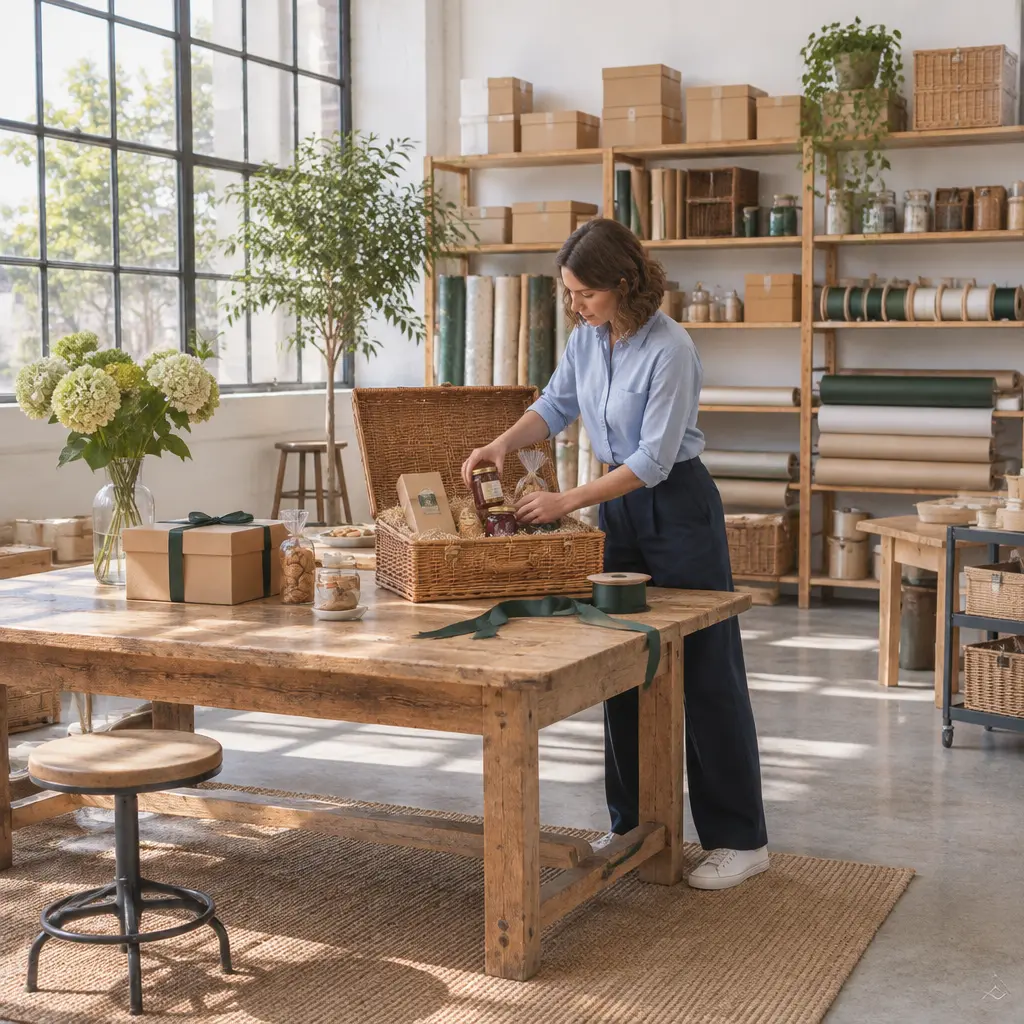
Lunar-themed gifts often use silver, cream, deep blue, celestial patterns, or circular forms. These are contemporary aesthetic choices and should not be mistaken for universal cultural symbols. Reusable packaging, recycled paper, refillable containers, and locally sourced goods can make a gift more considerate. The United Nations Environment Programme has identified packaging as a major source of plastic waste, while emphasizing reduction and reuse as important approaches. For a celebration, hosts can also offer digital invitations, avoid unnecessary single-use decorations, and select objects the recipient is likely to keep or use.
Personalization and meaning
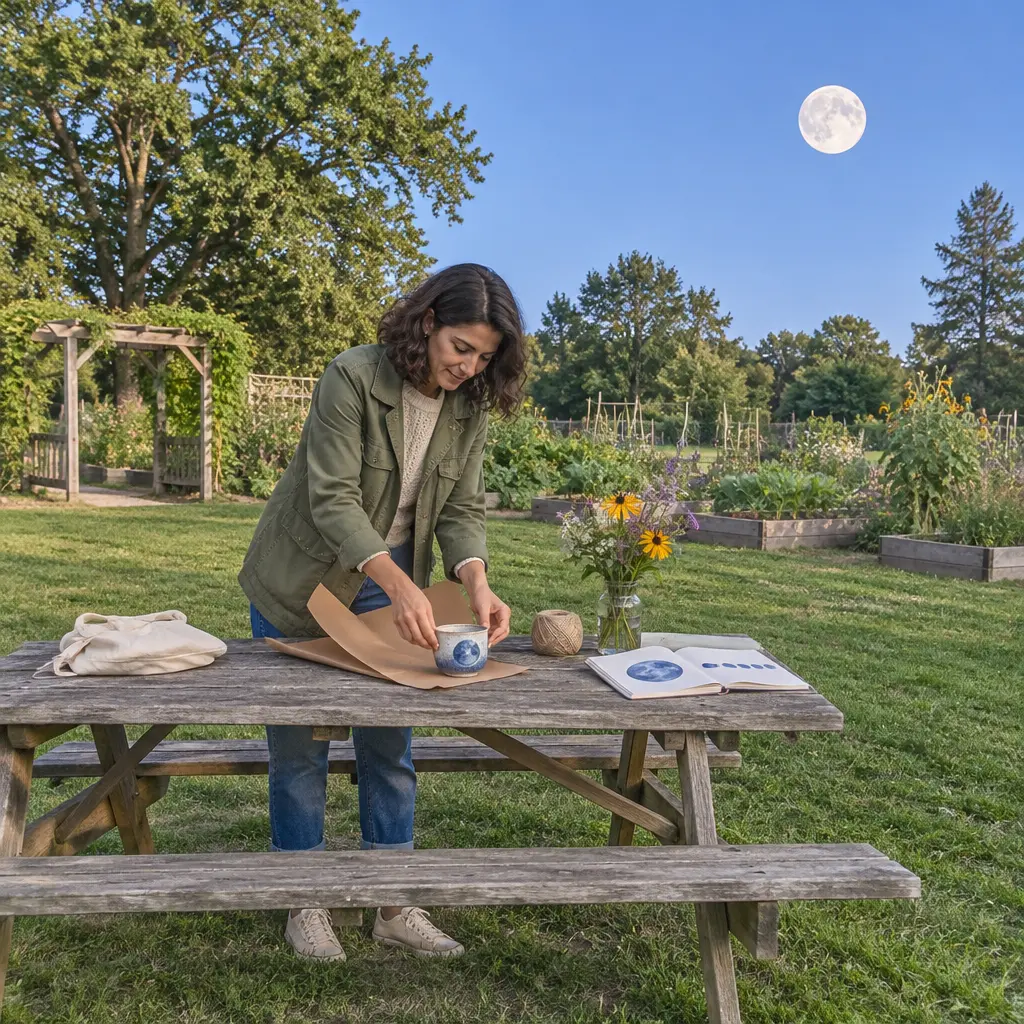
Personalization makes a gift feel connected to the recipient rather than to a trend. A note might explain why the giver chose a particular book, plant, handmade cup, or journal; a moon-phase print can mark a birthday or shared occasion. If a gift references a cultural tradition, include reliable context and ensure the maker or community is represented fairly. Avoid labeling ordinary products as “ancient,” “sacred,” or “traditional” without evidence.
A gathering that favors experience over excess
A full moon gathering can be as simple as a shared meal, quiet observation, poetry reading, or nature walk. The Moon’s brightness does not guarantee ideal viewing: clouds, local light pollution, and the Moon’s position all affect visibility. The International Dark-Sky Association explains that artificial light at night can interfere with observing the night sky and affect wildlife. Choose a safe, accessible location, check local conditions, and keep lighting low and shielded where practical. A chart accompanying this article could compare a traditional lunar calendar, a modern gift checklist, and low-impact hosting choices.
Planning a Culturally Respectful Full Moon Event
A respectful event begins with clarity about its purpose. Is it a family gathering, a cultural celebration led by members of that community, or a general evening inspired by lunar observation? Naming the purpose honestly helps prevent cultural borrowing from being presented as authentic practice. It also makes the event easier to plan around accessibility, food preferences, local customs, and the needs of guests.
Research, consultation, and accurate language
When an event draws on a specific culture, consult credible sources and, where appropriate, practitioners or cultural organizations. Explain which elements are traditional, which are personal adaptations, and which are simply contemporary design. Do not reproduce religious rites, sacred objects, or ceremonial language for entertainment or sales without permission and meaningful guidance.
A practical planning sequence
- Identify the gathering’s purpose and the community or tradition, if any, it represents.
- Check the date and local Moon visibility using a reliable astronomical calendar.
- Choose an accessible venue and make a weather and indoor-backup plan.
- Select a modest gift or shared activity that suits guests and avoids unnecessary waste.
- Provide clear context, credit makers, and invite feedback from participants.
Example: a locally grounded moon-viewing evening
A neighborhood group could host a moon-viewing evening with a local astronomer, a short explanation of the lunar cycle, and foods sourced from nearby producers. Guests might receive a reusable notebook printed by a local artist, with a card describing the artwork rather than assigning it invented spiritual meaning. If organizers wish to acknowledge a cultural festival, they can invite community partners to lead or advise the program and compensate them for their expertise.
Conclusion: Making Lunar Celebrations Meaningful
Full moon traditions are diverse, shaped by religious practice, local history, calendars, and family life. Contemporary gift aesthetics can complement a gathering when they emphasize thoughtful design, useful objects, responsible materials, and honest cultural context. The Moon’s roughly 29.5-day phase cycle offers a recurring opportunity to gather, observe, and reflect, but it does not make different traditions interchangeable. Research the meaning behind any practice you reference, prioritize community guidance, and choose gifts and activities that are personal, respectful, and low-waste.
Sources: NASA, Moon Phases, https://science.nasa.gov/moon/moon-phases/; Encyclopaedia Britannica, Mid-Autumn Festival, https://www.britannica.com/topic/Mid-Autumn-Festival; Encyclopaedia Britannica, Purnima, https://www.britannica.com/topic/Purnima; Encyclopaedia Britannica, Uposatha, https://www.britannica.com/topic/Uposatha; United Nations Environment Programme, Beat Plastic Pollution, https://www.unep.org/interactives/beat-plastic-pollution/; International Dark-Sky Association, Light Pollution, https://www.darksky.org/light-pollution/