A luxury hamper is a curated collection of food, drink, and complementary objects arranged to create a considered gifting experience. Its composition works best when flavors, textures, colors, and packaging build in deliberate layers: crisp against creamy, sweet against savory, and tactile materials against neatly protected products. This approach matters in a growing gifting market: the Centre for Retail Research reported that UK online retail sales reached £236 billion in 2023, making presentation and delivery an important part of how many consumers encounter gifts. The guide below explains the principles behind hamper layering, how to balance flavor and texture, how to plan packaging and arrangement, and how to adapt the design to practical needs.
Luxury hamper composition layers textures and flavors for premium unboxing
There is no single formal industry definition of “luxury hamper composition.” In this article, it means the planned selection, pairing, and presentation of products so that a recipient experiences a coherent sequence rather than a random assortment. The concept brings together sensory design, gift curation, packaging, and food pairing. A successful hamper is not simply expensive: its products should have a clear relationship, suit the recipient, travel safely, and reveal themselves in an appealing order.
Composition as a designed sequence
A designed sequence is the order in which products are encountered, from the first visual impression to the final taste. For example, a Mediterranean hamper might open with a bottle of olive oil and a folded recipe card, then reveal crackers, olives, a firm cheese, and a small jar of honey. The connection between products gives the selection a narrative: ingredients can be served together, and each item helps explain the others.
This is also a practical definition. The United States Food and Drug Administration advises consumers to check food labels for ingredients and major allergens. A thoughtful curator therefore considers dietary requirements and clear product information alongside appearance and flavor. Where a hamper includes foods with different storage needs, its composition should make those requirements easy to understand.
Hyponyms: hamper styles and composition approaches
Hamper composition includes several narrower approaches, or hyponyms, each organized around a different gifting purpose:
- Gourmet food hamper: specialty foods arranged around a cuisine, ingredient, or meal.
- Wine-and-cheese hamper: drinks and accompaniments selected for complementary aroma, acidity, salt, and texture.
- Wellness hamper: teas, snacks, bath products, or other items grouped around relaxation or self-care.
- Celebration hamper: products selected for a milestone, holiday, or shared occasion.
- Corporate hamper: a gift designed for a professional audience, with attention to broad appeal, branding, and delivery logistics.
The intended style shapes the sensory choices. Once the hamper’s purpose is clear, texture provides a useful next layer because it can create variety even when the flavor palette is restrained.
Texture layering builds contrast and variety in luxury hampers
Texture layering is the deliberate inclusion of contrasting mouthfeels and material surfaces. In food, that can mean crisp crackers beside soft cheese, silky chocolate beside roasted nuts, or chewy fruit beside brittle biscuits. In packaging, it can mean the contrast of a smooth glass jar, embossed paper, woven ribbon, and a protective paper filler. Repeating one texture throughout can make a hamper feel monotonous, while too many unrelated textures can make it appear chaotic.
Crisp, creamy, chewy, and crunchy foods
A useful texture plan includes a few distinct categories rather than an item in every possible category. Pairing crisp toast or crackers with a creamy spread creates a clear contrast; adding a chewy element such as dried apricots extends the experience. The texture should also suit how products will be eaten. A hard biscuit may complement a soft cheese, but fragile crackers need protection from heavier products during transit.
A practical example is a tea hamper with loose-leaf tea, shortbread, a smooth honey, and crisp candied ginger. The tea establishes the occasion, while the other textures create variety without competing with it. The National Coffee Association’s descriptions of coffee tasting similarly draw attention to qualities such as body and mouthfeel, illustrating how texture contributes to sensory evaluation beyond flavor alone.
Packaging surfaces and protective structure
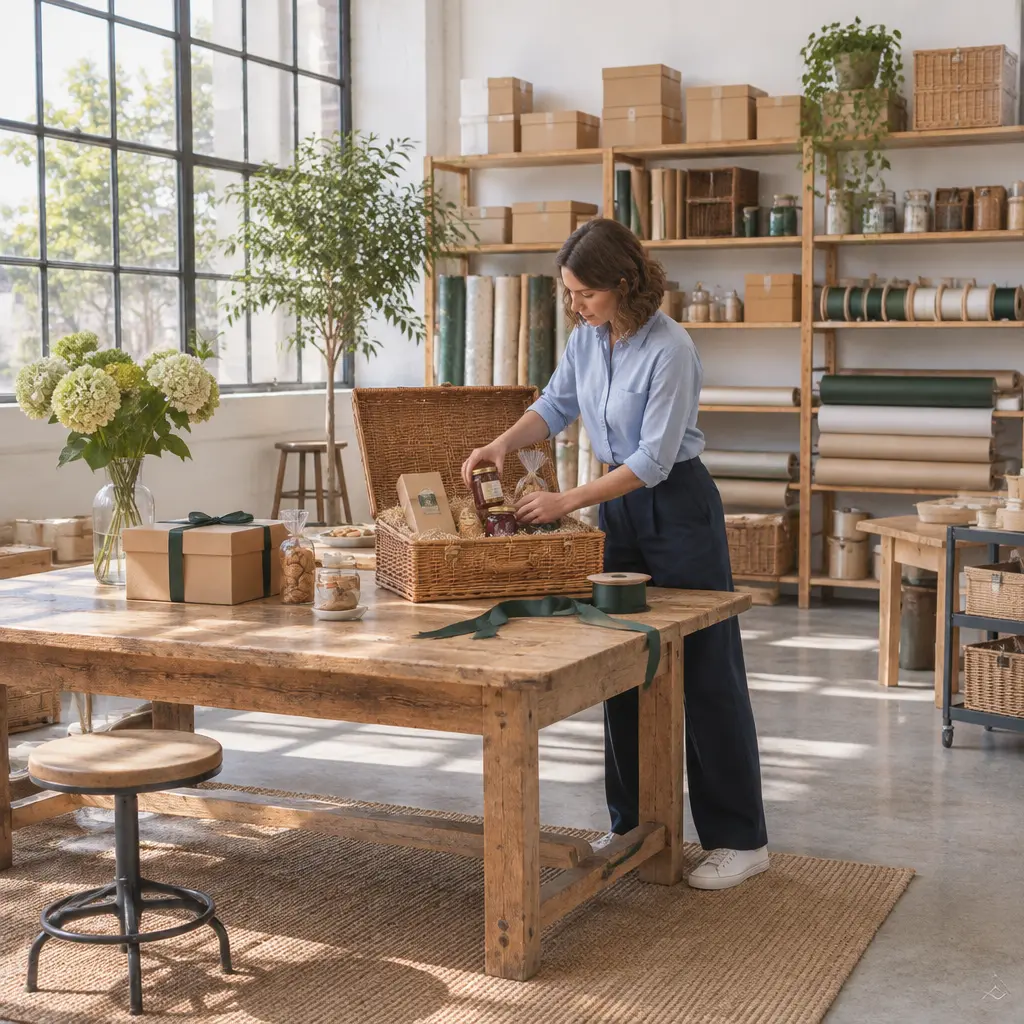
Packaging texture is part of the first impression, but it also has a protective function. A rigid box or sturdy basket provides structure; inserts, dividers, and cushioning help prevent movement; tissue or paper shreds soften the visual transition between products. The Institute of Packaging Professionals describes packaging as serving functions that include containment, protection, and communication. For a premium hamper, those functions should work together rather than be treated as separate finishing touches.
Use textured materials selectively. A natural-fiber ribbon or uncoated paper can suggest craft, while a glossy label can make a product stand out. The materials should not obscure food labels, create excessive waste, or compromise safe handling. With texture established, flavor pairing can give the hamper its central logic.
Flavor layering gives luxury hampers balance and coherence
Flavor layering is the arrangement of tastes so that items complement, contrast, or extend one another. Common taste descriptions include sweet, sour, salty, bitter, and savory. A balanced hamper need not contain all five; instead, it should avoid an unintentional concentration of one profile. A box dominated by sweets, for instance, may benefit from a salty or tart counterpoint, while a savory selection can gain dimension from fruit preserves or a dark chocolate finish.
Complementary pairings
Complementary pairings share or reinforce sensory qualities. A mature cheddar with oat crackers, a floral tea with honey, or dark chocolate with roasted almonds can feel cohesive because the products have compatible intensity and serving occasions. The Specialty Food Association’s annual industry research tracks consumer interest in specialty foods, including products such as artisan cheese, chocolate, and condiments—categories often used to create distinctive gifting assortments.
A pairing should also be usable. Include a product that helps bring the assortment together, such as crackers for cheese or biscuits for preserves. When practical, add a brief serving suggestion so the recipient understands how to enjoy the combination.
Contrasting pairings and palate progression
Contrasting pairings create interest by setting different flavors against one another: salty nuts with dried fruit, tart marmalade with buttery biscuits, or sharp cheese with a sweet chutney. A palate progression arranges these contrasts in a sensible order, often moving from lighter or milder flavors toward richer, more intense ones. This is not a strict rule, but it can help a hamper feel like a tasting rather than a collection of unrelated products.
For a small tasting hamper, begin with a mild cracker and preserve, continue to a savory snack or cheese, and finish with chocolate or confectionery. Avoid pairing solely by color or prestige: products should make sense together in taste and use. The next step is to translate that sensory plan into a stable, attractive arrangement.
Product arrangement turns hamper layers into a premium unboxing
Unboxing is the recipient’s first interaction with the physical gift. A premium opening typically has a clear focal point, visible product labels, and a sequence that reveals the contents without requiring the recipient to unpack a tangle of filler. The arrangement should look generous while remaining secure. In e-commerce, that balance is especially important because products must withstand handling and transport before the recipient sees them.
Visual hierarchy and reveal order
Visual hierarchy means directing attention through size, height, color, and placement. Place the largest or most recognizable item toward the back or center, then arrange smaller products around it. Keep labels facing outward where possible, and use a card or tissue layer to create a deliberate reveal. A simple hierarchy is often more effective than filling every gap with decorative objects.
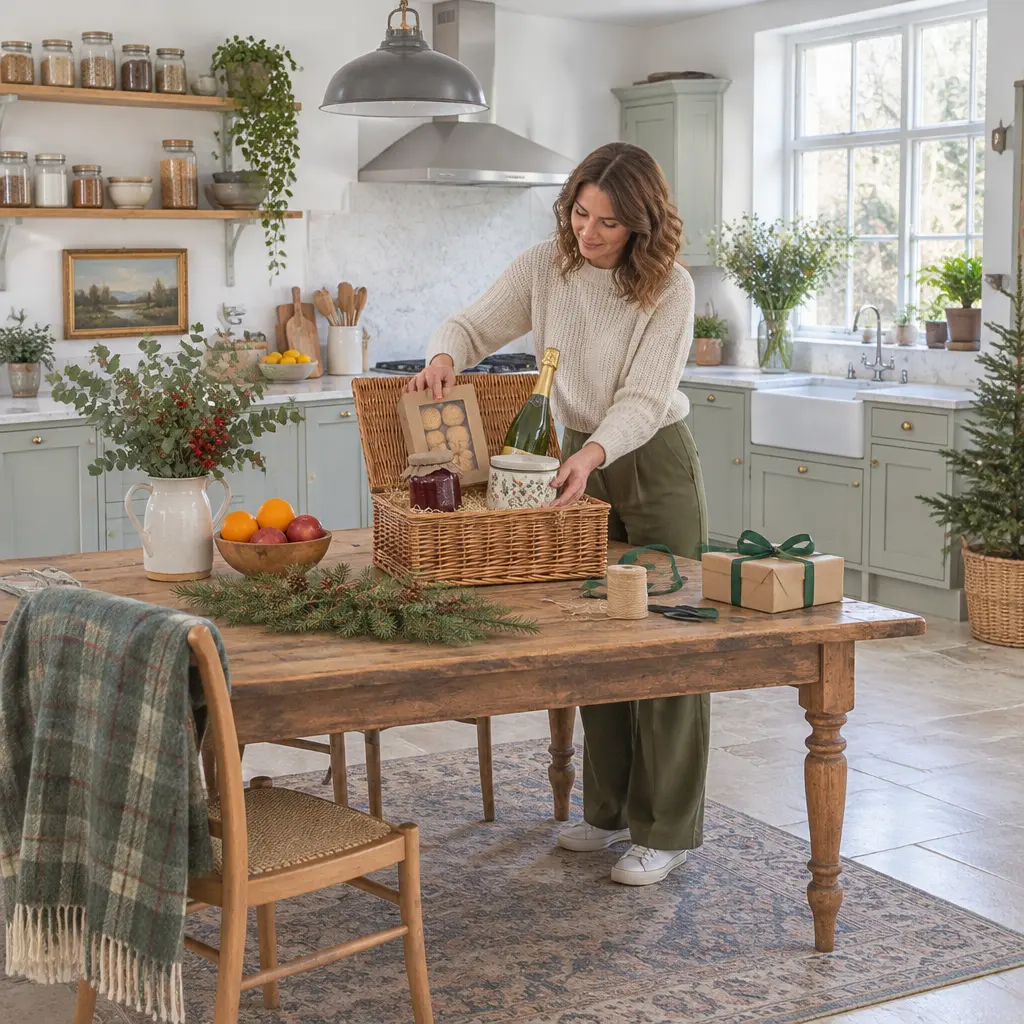
A seasonal example could pair a prominent bottle of sparkling juice with fruit preserves, biscuits, and chocolate. A restrained palette—such as cream, deep red, and green—can connect the products without making them appear identical. The same principle applies to corporate gifts: a discreet branded card may identify the sender while allowing the products to remain the visual focus.
Stability, food safety, and shipping
A beautiful arrangement is not successful if it arrives damaged. Put heavier, sturdier items low in the container, separate glass from fragile foods, and fill movement gaps with suitable cushioning. Check the product’s storage instructions and account for temperature-sensitive items. The U.S. Department of Agriculture’s Food Safety and Inspection Service advises that perishable foods should not remain at room temperature for more than two hours, or one hour when temperatures exceed 90°F (32°C). That guidance makes shipping method and delivery timing important for hampers containing perishable goods.
For shelf-stable hampers, confirm that packaging protects products from crushing, leakage, and contamination. For chilled or frozen goods, use an appropriate cold chain and clearly communicate delivery and storage instructions. Always check local rules for alcohol, restricted foods, and cross-border shipments. These details turn presentation into a dependable gifting experience rather than a purely visual exercise.
A practical method for composing a luxury hamper
A consistent planning method helps maintain quality across personal, seasonal, and business gifting. Start with the recipient and occasion, then build outward from one defining item. The following sequence keeps the selection cohesive and easy to review:
- Choose a clear theme, such as afternoon tea, regional specialties, or a celebratory aperitif.
- Select one hero product that communicates the theme and sets the quality level.
- Add complementary products that can be served with or alongside the hero item.
- Check sensory balance: vary textures and avoid an overly sweet, salty, or intense assortment.
- Review ingredients, allergens, dietary suitability, and storage requirements.
- Choose packaging that protects the contents and supports the intended visual style.
- Arrange by weight and fragility, then test whether the contents remain secure when the box is gently moved.
- Add a concise message or serving suggestion that explains the selection without overloading the presentation.
A quality check can be recorded as a simple chart with four columns: product, flavor role, texture role, and packing requirement. This makes gaps visible—for example, a hamper may have several sweet products but no savory counterpoint, or an attractive glass jar may need a divider. The chart is a planning aid, not a formula: recipient preferences and practical constraints should guide the final choices.
Conclusion: thoughtful layering makes hampers memorable and practical
Luxury hamper composition combines a coherent theme, varied textures, balanced flavors, and a carefully planned reveal. Texture layering creates contrast in both food and packaging; flavor layering connects products through complement and contrast; and thoughtful arrangement protects the contents while making the unboxing feel intentional. Food safety, allergens, shipping conditions, and recipient preferences are equally important to the finished gift.
To create a stronger hamper, begin with one defining product, select items that work with it, and review the assortment for sensory balance and safe delivery. Then test the arrangement as both a presentation and a package. For further planning, consult food-label guidance, relevant shipping requirements, and current specialty-food research before building a collection for a specific audience or occasion.
Sources: Centre for Retail Research, Online Retailing: Britain, Europe and North America 2024, https://www.retailresearch.org/online-retailing.html; U.S. Food and Drug Administration, Food Allergies, https://www.fda.gov/food/food-labeling-nutrition/food-allergies; National Coffee Association, The Coffee Taster’s Flavor Wheel, https://www.ncausa.org/About-Coffee/Coffee-Tasters-Flavor-Wheel; Institute of Packaging Professionals, Packaging Education and Resources, https://www.iopp.org/; Specialty Food Association, State of the Specialty Food Industry, https://www.specialtyfood.com/industry-insights/state-of-the-specialty-food-industry/; U.S. Department of Agriculture, Food Safety and Inspection Service, Keep Food Safe! Food Safety Basics, https://www.fsis.usda.gov/food-safety/safe-food-handling-and-preparation/food-safety-basics/food-safety-basics.